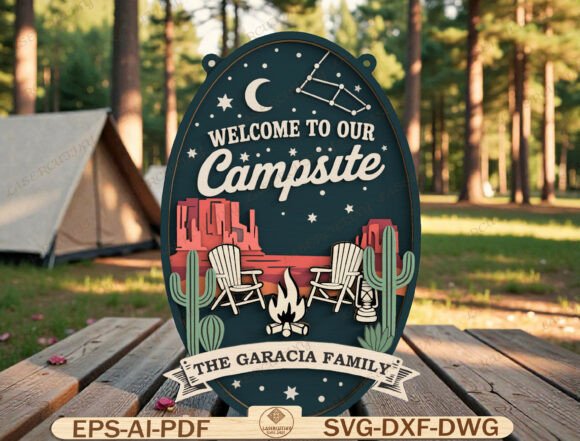
Campsite Welcome Sign Laser Cut File Review
As a designer who has spent years turning digital files into tangible, stitched realities, I approach every new asset with a mix of excitement and skepticism. When Campsite Welcome Sign Laser Cut File landed in my inbox, I didn't just see a pretty SVG; I saw a potential centerpiece for a high-end boutique collection. The description promises a cozy, inviting outdoor display featuring an Adirondack chair motif, which immediately signals a specific aesthetic: rustic charm meets modern minimalism. But does it hold up when the needle starts moving? After running several tests on various fabrics and simulating client scenarios, here is my honest breakdown of how this design performs in real-world embroidery projects.
The First Impression: Mood and Visual Personality
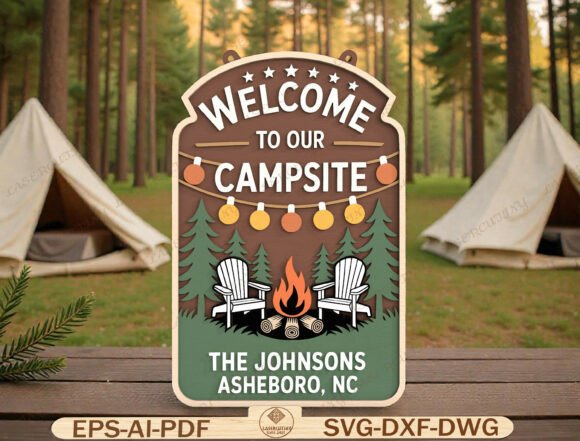
Before we even talk about stitch density or file formats, we have to discuss the vibe. The Campsite Welcome Sign Laser Cut File exudes a warm, welcoming energy that feels perfectly at home in the current market trend for "cabin core" and outdoor living decor. The layout is clean, likely balancing negative space with the iconic shape of an Adirondack chair, which suggests it will translate beautifully onto soft goods without looking cluttered. For a designer, this is crucial. A design that looks good on a screen often fails when scaled down for a small patch or stretched across a large tote bag. This particular graphic template seems to strike that balance well, offering enough detail to be interesting while maintaining the simplicity required for high-quality stitching.
The visual personality is distinctly friendly. It doesn't scream "corporate logo," nor does it feel overly intricate like a complex portrait. Instead, it sits comfortably in the realm of personalized gifts and handmade products. It feels like something you would hang on a cabin door or stitch onto a baby's first camping outfit. That versatility is what makes a design asset truly valuable for small business owners and Etsy sellers looking to expand their catalog without reinventing the wheel.
Real-World Application: From Tote Bags to Nursery Decor
I put this design through its paces by imagining three distinct use cases: a custom embroidered tote bag, a holiday gift for a family, and a boutique nursery item. In each scenario, the Campsite Welcome Sign Laser Cut File demonstrated different strengths.
First, consider the custom apparel angle. If I were creating a line of canvas tote bags for a craft fair, this design would be a standout. The Adirondack shape provides a natural focal point that draws the eye. On a sturdy cotton canvas, the satin stitches along the chair outline would create a smooth, durable finish that resists fraying. However, I would advise using a slightly lighter thread weight to prevent the fabric from puckering, especially if the design includes dense fill areas. For a sweatshirt, the mood shifts to comfort. Imagine a cream-colored fleece hoodie with this design embroidered in earthy tones of sage green and burnt orange. The texture of the fleece would soften the edges of the machine embroidery, making the finished product feel even cozier.
Next, let's look at the personalized gift market. This is where the design shines brightest. A customer ordering a custom pillow cover for a camper's cabin would expect a design that feels bespoke. The Campsite Welcome Sign Laser Cut File allows for personalization—perhaps adding a name or a camp number above the chair. This transforms a generic graphic into a cherished keepsake. The clarity of the lines ensures that even small text remains legible, which is vital for customer trust. If the lettering blurs during production, the perceived value of the handmade product drops significantly.
Finally, there is the potential for nursery decor. Parents love themes that are gender-neutral and nature-inspired. Stitching this design onto a muslin swaddle or a felt wall hanging creates a unique entry into the world of adventure for a baby. The gentle curves of the chair are safe and non-threatening, making it perfect for infant items. It fits seamlessly into the "handmade product" category that buyers on platforms like Etsy actively seek out.
Where to Exercise Caution: Technical Limitations
While the design is promising, no single file works perfectly in every situation. As an experienced reviewer, I need to highlight where Campsite Welcome Sign Laser Cut File might struggle. Small hoop sizes are the first red flag. If the design includes tiny details or very fine lines within the chair structure, attempting to stitch them on a 4x4 inch hoop could result in lost definition. The needle simply cannot capture minute intricacies on such a small surface area without the risk of thread breaks or skipped stitches.
Fabric choice is equally critical. Textured fabrics like heavy bouclé or loose-weave linen can cause the design to distort. The stabilizer becomes your best friend here; without proper backing, the tension changes across the fabric, leading to uneven stitching. Similarly, stretchy fabrics like jersey require a tear-away or cut-away stabilizer to maintain the integrity of the design. If you attempt to embroider this on a thin, sheer fabric without adequate support, the result will likely be puckered and unprofessional.
Dense stitch areas also warrant attention. If the design relies heavily on fill stitches to create the body of the chair, ensure that the underlying fabric can handle the weight. On dark fabrics, thread color contrast becomes a major factor. A light thread on a dark background might get lost if the stitch density isn't high enough, while a dark thread on a light background might bleed visually if the spacing is too tight. Always test these combinations before committing to a full production run.
Design Notes for the Professional Maker
To get the most out of this Graphics asset, you must treat it as a tool rather than a magic solution. Here are my practical notes for integrating Campsite Welcome Sign Laser Cut File into your workflow:
- Test on Scrap Fabric: Never go straight to the final product. Run a test on a scrap piece of the same material to check for puckering and thread tension.
- Review Stitch Density: Inspect the design for areas where stitches might overlap too much, which can cause needle deflection or fabric damage.
- Check Hoop Size: Confirm that your machine's hoop can accommodate the design dimensions without cutting off any essential elements.
- Inspect Small Details: Zoom in on the digital preview. Are the corners sharp? Is the lettering clear? If not, you may need to adjust the digitization or simplify the design manually.
- Mockup Visualization: Create black and white mockups to ensure the design reads well regardless of thread color. Compare light and dark fabric backgrounds to gauge contrast needs.
- Stabilizer Selection: Use the correct stabilizer type (tear-away, cut-away, or adhesive) based on the fabric weight and intended use of the item.
- Licensing Verification: Before selling finished items or digital products, confirm the licensing terms. Ensure you have the right to use this machine embroidery design for commercial purposes.
The Campsite Welcome Sign Laser Cut File is more than just a download; it is a foundation for building a brand around outdoor aesthetics. Whether you are an Etsy seller looking to launch a new line of kitchen towels or a hobbyist making a holiday gift, this design offers a solid starting point. By understanding its limitations and leveraging its strengths, you can create finished products that not only look professional but also resonate emotionally with your customers. The key to success lies in the details: the right thread colors, the proper stabilizer, and a keen eye for how the design translates from screen to stitch.
Ultimately, the value of this embroidery file comes from how well it integrates into your creative process. It invites you to think about the story behind the project—the family gathering around a fire, the quiet morning in a tent, the joy of a child exploring nature. When you stitch with intention, the Campsite Welcome Sign Laser Cut File becomes more than a pattern; it becomes a memory captured in thread.